Graphic design from around the world: Japanese design
Our tendency to seek inspiration in the same places gets us stuck in creative ruts. But it’s a big world out there, and there’s lot of inspiration to be sought out — let’s start with Japanese graphic design. Bold colors, exaggerated character designs, visualised personalities and densely packed information typify a lot of Japanese designs, and it’s these techniques that can be used as a wealth of inspiration. So, we’ve plunged into the world of Japanese graphic design and have emerged with 10 observed visual design techniques to share with you. Whether you’re looking for a bit of new inspiration, references, or to learn a little about Japanese culture, stay tuned.
01. Bright Colors
One thing you will notice when delving into J-design is that it’s teeming with color and life. The more common color combination for Japanese design is red, gold, and black, but when searching through any archives you’ll see its full spectrum of palettes. This use of color is rooted very heavily in Japanese culture in general. Take a look at the streets of Harajuku, or the vibrancy of Shibuya. It makes sense that this love for all hues would translate to graphic design. When you’re building a color palette and feel pressured to only use 2-3 colors, why not consider breaking that ‘rule’ and using a more diverse palette and see what it can do for you and your design.
There is no fear that colors will clash or overwhelm the design in pieces like this, as that’s actually the point. The color brings life and character into the designs and makes for pieces that can’t help but catch your eye.
02. Mixed Languages
Another commonly recurring technique in Japanese design is the use of both Japanese and Roman characters in typography.
“Japanese words are usually written with ideographic characters, and can also be written with the Roman characters we’re familiar with, and English mixed with Japanese writing is also a common occurrence in Japanese design,” notes Ryan Hageman, designer and curator of Gurafiku. “Using both Japanese and English, I transposed the lines of type over one another, manually curving the letterforms to make the two languages blend together,” Hageman says.
Commenting on the effect of his technique, Hageman says, “In certain areas the Japanese text would become most prominent, and as those characters fade away, the English text would then come to the foreground.” The contrast between the two languages makes for an intriguing comparison of the two cultures and a highly engaging typographical design – particularly if you’re bilingual to both languages!
03. Custom Typography
Typography in Japanese design culture is vastly different to western design culture for a number of reasons, but namely, the complexity of the Japanese character system. “It takes a lot of work to create a Japanese typeface,” Ryan Hageman says, “and because of this there aren’t nearly as many off-the-shelf and expressive typefaces to choose from… For a poster or book cover, it’s easier to just draw up the characters for a few words than to create an entire typeface.” Because of the fact that this type is often custom created for each project, it usually features quite heavily in designs.
04. Brush Strokes
Brush strokes are yet another commonly recurring motif seen in Japanese design. This motif is largely in part tied to the traditional practises of Japanese calligraphy, also known as an art form called ‘Shodou’. In Shodou art, the brush strokes are often messier, streaky, and cruder, as the art form dictates that no corrections to each stroke should be made, instead each line should simply flow into the next. We can see a lot of Shodou-inspired brush strokes and effects in modern Japanese design, ranging from illustrations to typography.
05. Gradients
Another trend you might observe in Japanese graphic design is a large use of gradients. Subtle colours fading and bleeding into one another is a very commonly used graphic element, often used for backgrounds to bring life and color to designs.
06. Organic Floral Patterns
Hanakotoba (or “Floriography”) is the study of flowers, an important facet of Japanese culture. In Japan, certain flowers and their colors are tied with certain ideas, symbols, and emotions. For example, pink flowers are thought to signify the curing of diseases, red is passionate love, and white symbolises virtue. So, we see a lot of flowers and floral patterns being used in Japanese graphic design, both in a symbolic capacity as well as a decorative one.
07. Circles
Just as the Japanese flag hints, circles are another recurring element in Japanese graphic design. Inherent symbols of balance and harmony, circles are widely used motifs in Japanese design. A common motif used throughout Japanese culture is the Mon.

The Mon can be described as “the Japanese counterpart to the European coat of arms”. As Rain Noe writes, the Mon is “typically contained within a circle, tend to have axial or rotational symmetry, and rely more on abstract geometric shapes than realistic reproductions of real-world items.” The Mon is a prevalent part of Japanese design, particularly when it comes to branding and logos. One you may be familiar with is the Mitsubishi logo. While this logo doesn’t capture the iconic circular shape, it maintains the rotational symmetry of the Mon to create a balanced and even brand mark. This valuing of symmetry and balance is evident in a lot of Japanese graphic design and is usually displayed via a heavy use of circle motifs.
08. “Cute Culture”
I’m sure when I say ‘Japan’ you think of a lot of things, and chances are one of those things are the cute, exaggeratedly drawn cartoons we see so often associated with Japan. This ‘cute culture’ (or “kawaii”) is a huge part of Japanese culture, the adorable animations are everywhere, from television shows and merchandise to professional branding ventures and products.Having an adorable illustration of an animal for your corporate website may seem odd to some, though.
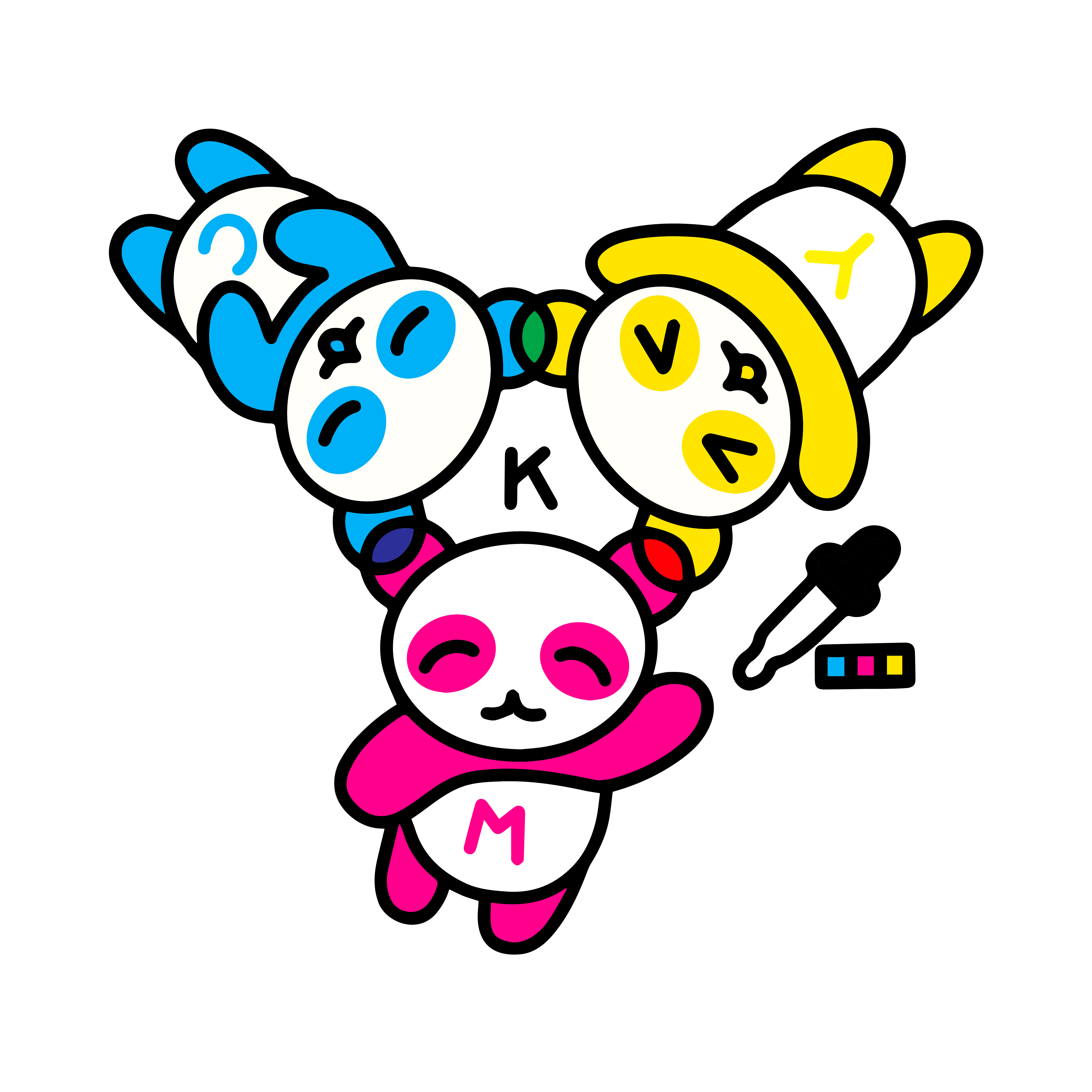
As Natalie Avella writes in her book Graphic Japan, “Japanese tend to enjoy funny topics for daily conversation… This is an attempt to disarm the listener and to develop more intimate relationships. Similarly, funny mascots tell you that the owner is friendly and unpretentious.” The use of playful illustrations brings a unique touch of character, personality and life into design, a very different interpretation to the typical sleek, sophisticated designs that dominate Western design.
09. Information-Dense Design
When browsing Japanese designs, particularly when it comes to web design, you may begin to notice a trend in sites appearing very information-heavy and densely packed with type and content.
It would seem that minimalism does not have as large of a place in mainstream Japanese web design — but why? “(In Japan), details are a welcome aspect of communication and therefore web design too, as a website conveys information and sells the company and its products in place of a live salesperson,” says Rich Mirocco, “Details are needed because risk is absolutely not tolerated. More is better. Way more is best.” This propensity and generalized need for lots of information to be presented at once provides us with a lot of stunning examples of what can be done when you have a whole lot of content and not a lot of room.
10. Collage and Layering
In a similar vein to the previous point, there is a large demonstrated propensity in Japanese visual design to layer elements, producing a collage-like effect.By taking type, imagery, and other elements and layering them over one another, a dynamic, fun, and busy collage-like effect is created. Consider doing away with the minimalist approach for a while and adding in elements just for the sake of it. A clever composition, a strong concept and a fun approach can yield some really character-driven and eye-catching results!
Conclusion
It’s hard to break down Japanese design into just 10 categories of visual techniques. The culture of design in Japan is so ubiquitous, dynamic, and constantly evolving, but these 10 visual techniques are a good starting point for anyone looking to expand their design horizons.
If anything, we can take this lesson from Japanese graphic design: don’t be afraid to experiment. While (for the most part) western design dictates that when it comes to design aesthetics ‘clean is king’, don’t be afraid to shake that up. Use color boldly, use traditional Japanese motifs, customise your type, get symbolic, seek balance, collage your elements in a way that most minimal designers would never dare.
If your interest in Japanese graphic design has been piqued by this collection of pieces, a fantastic resource to continue your research is Gurafiku. Compiled by designer Ryan Hageman, Gurafiku is a catalogue of the inspiring, engaging and wonderful parts of Japanese design.
Another fantastic resource is Japanese Design which compiles the latest art, design and creations from talented Japanese creatives.Now over to you. What are your thoughts and feelings about the visual trends and techniques from Japanese designers? Have you noticed any other recurring techniques, or maybe there’s one that catches your eye in particular?